


Dubai City of the Future | Innovation, Architecture, and Smart Urban Living
- Wisdom point
- Dec 24, 2025
- 6 min read

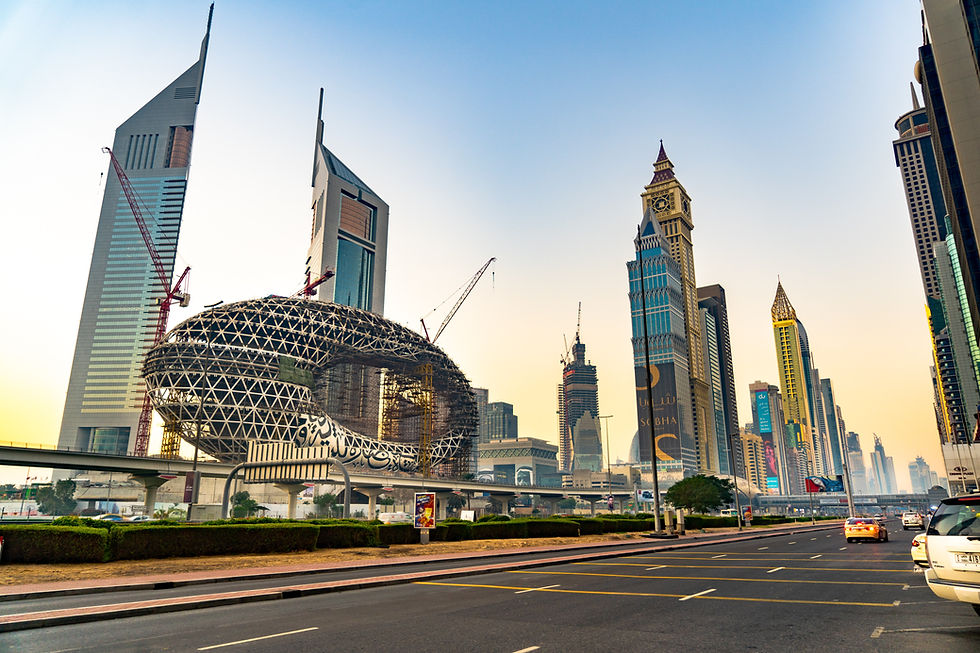
Rising from the sands of the Arabian Desert, Dubai stands as a dazzling symbol of what human imagination, ambition, and determination can achieve. Once a quiet fishing and trading village on the Persian Gulf, it has transformed into one of the most advanced urban centers on the planet. Known widely as Dubai: City of the Future, this extraordinary metropolis blends futuristic architecture, cultural diversity, and cutting-edge technology in ways few cities can rival. Beneath the glittering skyline lies a story of transformation built on vision, innovation, and the will to redefine possibility itself.
Important Details & Classification
Key Facts/Figures:
1. Population (2025): Approximately 3.7 million
2. Average annual visitors (pre-pandemic): Over 16 million international tourists
3. GDP contribution: Around 30% of the UAE’s total economy
From Desert Sands to Global Skyline of Dubai City of the Future
Less than a century ago, Dubai was a modest settlement of pearl divers, traders, and Bedouin families living along the Dubai Creek. The discovery of oil in the late 1950s changed its fate, but unlike many other oil rich regions, Dubai quickly realized that its reserves were limited. The leadership, particularly under the late Sheikh Rashid bin Saeed Al Maktoum, took a visionary approach: use the wealth from oil to build a diversified, future focused economy.
This forward thinking mindset set Dubai apart. By the 1970s, the city had begun constructing ports, airports, and infrastructure that would later serve as the backbone of a global hub. The oil that once fuelled its economy became merely a spark that ignited something far greater, a blueprint for sustainable growth beyond petroleum.
Architecture Beyond Imagination
One of Dubai’s most striking features is its architecture, which seems to challenge gravity itself. The Burj Khalifa, soaring over 828 meters, redefined what was possible in engineering. But this towering icon is only one piece of a larger architectural masterpiece. The cityscape includes the Burj Al Arab, shaped like a sail, which became an instant global symbol of luxury, and Cayan Tower, famous for its twisting design that spirals skyward.
The Palm Jumeirah, visible from space, is another marvel of human ingenuity. Built on reclaimed land, its palm shaped design hosts luxury hotels, villas, and resorts. It was followed by even more ambitious projects such as The World Islands, a collection of man-made islands shaped like a map of the world.
Yet, Dubai’s architectural vision extends beyond aesthetics. The city has embraced smart building technologies, green construction, and AI based energy management systems. New developments like Dubai Creek Harbour and the Museum of the Future integrate sustainability with futuristic design, making the city a living laboratory for next generation urban planning.
The Pulse of Global Trade and Tourism of Dubai City of the Future
Dubai’s economy stands on three powerful pillars: trade, tourism, and transport. Its geographic location, between Europe, Asia, and Africa, turned it into a natural crossroads for global commerce. The Jebel Ali Port, one of the largest man made harbors in the world, and Dubai International Airport, a top international passenger hub, have made the city a global logistics powerhouse.
Tourism, meanwhile, drives its cultural and economic dynamism. Each year, millions of visitors flock to Dubai’s landmarks, including the Dubai Mall, Dubai Fountain, and Global Village. Mega events such as Expo 2020 Dubai showcased not just futuristic architecture but also ideas about sustainability and innovation in urban living. The city’s tourism model cleverly balances modernity with Middle Eastern hospitality, offering everything from traditional souks (markets) in Deira to luxury desert resorts.
The Dubai Shopping Festival, Dubai World Cup horse race, and Dubai Air show continue to attract international audiences, reinforcing the city’s reputation as a global entertainment and business hub.
A Cultural Mosaic in Motion

Though it appears ultra-modern, Dubai’s social fabric is deeply multicultural. Nearly 90% of its residents are expatriates, creating a global village where over 200 nationalities live side by side. English serves as the main language of communication, while Arabic remains the official and cultural cornerstone.
Dubai’s government invests heavily in cultural preservation and global dialogue. The Al Fahidi Historical District offers a glimpse into traditional Emirati life with wind towers, narrow lanes, and museums preserving the city’s roots. Meanwhile, the Dubai Opera, Alserkal Avenue, and Dubai Design District showcase the city’s creative renaissance, an intersection of East and West, tradition and technology.
The city’s commitment to tolerance and diversity has also made it a center for international diplomacy and cooperation. Events such as the World Government Summit and the Dubai Future Forum draw global thinkers to discuss pressing issues like climate change, AI ethics, and economic reform.
Sustainability and Smart -Dubai City of the Future
For all its opulence, Dubai is acutely aware of the environmental challenges it faces. With temperatures often exceeding 45°C, sustainability is not just a trend; it is a necessity. The government’s Dubai Clean Energy Strategy 2050 aims to generate 75% of the city’s energy from renewable sources by mid-century. One of the most ambitious projects is the Mohammed bin Rashid Al Maktoum Solar Park, one of the largest solar facilities in the world.
Smart city initiatives are reshaping daily life. Dubai’s leadership envisions a future where autonomous vehicles, AI-powered traffic systems, and paperless government services define urban living. The city already operates with blockchain-based systems for transactions, and Dubai Police has introduced AI and robotic assistance for public safety.
Even architecture reflects this shift. Projects like The Sustainable City, which features solar panels, green transportation, and waste recycling, are redefining what desert living can look like in the future.
Education, Science, and Space Ambitions
In its pursuit to be a City of the Future, Dubai invests heavily in education, research, and space exploration. Institutions like the Dubai Future Foundation and Mohammed bin Rashid Space Centre are pioneering programs that inspire young scientists and engineers across the Arab world. The launch of the Hope Probe to Mars in 2020 marked a historic moment for the UAE and positioned Dubai as a center for regional space exploration.
Education follows the same visionary path. The Knowledge Village and Dubai International Academic City bring together global universities and research hubs, encouraging innovation in technology, sustainability, and entrepreneurship. These initiatives align with the UAE’s long term plan known as Vision 2031, which aims to create a knowledge driven economy rooted in scientific excellence.
Challenges and the Road Ahead
Despite its glittering image, Dubai faces real challenges. Rising temperatures and high energy demands test its sustainability goals. The reliance on expatriate labor raises questions about long-term population balance and cultural integration. Additionally, the economy’s heavy dependence on tourism and real estate makes it vulnerable to global fluctuations.
However, Dubai’s strength has always been its adaptability. The city continues to diversify into fields like renewable energy, artificial intelligence, biotechnology, and advanced manufacturing. It has become a global case study in how urban centers can thrive through resilience, innovation, and forward planning. As it moves toward becoming a carbon-neutral and fully smart city, Dubai: City of the Future stands as a beacon of what 21st-century living could become.
Frequently Asked Questions (FAQs)
1. Why is Dubai called the “City of the Future”?
This is due to Dubai's futuristic skyline, advanced infrastructure, and its leadership in technology, sustainability, and space exploration.
2. How did Dubai grow so fast?
Visionary leadership invested oil revenues into trade, tourism, and technology, building infrastructure that attracted global business and talent.
3. What is the tallest building in Dubai?
The Burj Khalifa, standing at 828 meters, remains the tallest building in the world.
4. How does Dubai handle its extreme desert climate?
Dubai manages its extreme desert climate through innovative cooling systems, green architecture, and massive investments in renewable energy projects such as the solar park.
5. What is the main source of Dubai’s income today?
Contrary to popular belief, oil contributes very little. Most of Dubai’s income comes from tourism, trade, finance, and real estate.
6. What makes Dubai’s architecture unique?
Its blend of traditional Islamic motifs with futuristic engineering is showcased in landmarks like the Museum of the Future and Burj Al Arab.
7. How does Dubai promote cultural diversity?
Dubai promotes cultural diversity through open immigration policies, international events, and cultural districts such as Alserkal Avenue and Dubai Opera.
8. What are Dubai’s sustainability goals?
Dubai aims to become one of the world's cleanest and most energy-efficient cities by 2050, with a focus on renewable energy and green living.
9. What role does Dubai play in space exploration?
It hosts the Mohammed bin Rashid Space Centre, responsible for the UAE’s Mars mission and other scientific projects.
10. What does the future hold for Dubai?
Dubai is poised for continued growth in smart city technologies, sustainable development, and global innovation, positioning it as a model for modern urban living.

Comments