


Fun Astronomy Facts: View the Cosmos from Your Classroom

Space sometimes feels very far away.
You sit inside a classroom, open a science book, and look at photographs of planets, astronauts, and galaxies that seem impossible to reach. At night, the stars outside appear small and quiet. It almost feels as if space belongs only to scientists.
But the interesting thing is this:
Most discoveries about space actually began with simple curiosity.
Someone looked upward and asked a question.
Why does the Moon seem to change shape?
Why do stars appear in patterns?
Why do some planets move differently across the sky?

Human beings have asked these questions for thousands of years. Long before rockets and telescopes existed, people carefully observed the night sky. Ancient travellers used stars to guide themselves across deserts and oceans. Farmers watched constellations to understand changing seasons.
Even today, astronomy often begins the same way.
By looking up.
The Cosmos Is Bigger Than Most People Imagine
One of the first things students realize while learning astronomy is how unbelievably huge space really is.
Earth feels enormous when you are standing on it.
But compared to the universe, our planet is tiny.
Earth moves around the Sun.
The Sun is only one star among billions inside the Milky Way Galaxy.
And the Milky Way itself is only one galaxy among billions of others.
Even light, which travels incredibly fast, takes time to move across space.
Sunlight needs about eight minutes to reach Earth.
That means when you look at the Sun, you are not seeing it exactly as it is right now. You are seeing it as it looked eight minutes earlier.
Astronomy has a strange relationship with time.
Looking farther into space often means looking farther into the past.

The Moon Is Slowly Moving Away
The Moon appears steady and permanent in the sky, but it is actually drifting away from Earth very slowly.
Scientists discovered that it moves away by around 3.8 centimetres every year.
That may not sound dramatic. It is roughly the speed fingernails grow.
But over millions of years, even tiny movement becomes important.
Long ago, the Moon would have appeared larger in the sky than it does today.
The Moon also affects Earth more than many people realize. It helps create ocean tides and even helps stabilize Earth while the planet spins through space.
Without the Moon, life on Earth might look very different.

Venus Has a Very Confusing Day
Venus is one of the strangest planets in the Solar System.
A single day there lasts longer than an entire year.
At first, that sounds impossible.
But Venus spins extremely slowly. One full rotation takes about 243 Earth days. Meanwhile, Venus travels around the Sun in about 225 Earth days.
So the planet completes a year before finishing one day.
Venus also rotates backward compared to many planets.
If someone could safely stand there, the Sun would appear to rise in the west instead of the east.

Jupiter Is Absolutely Massive
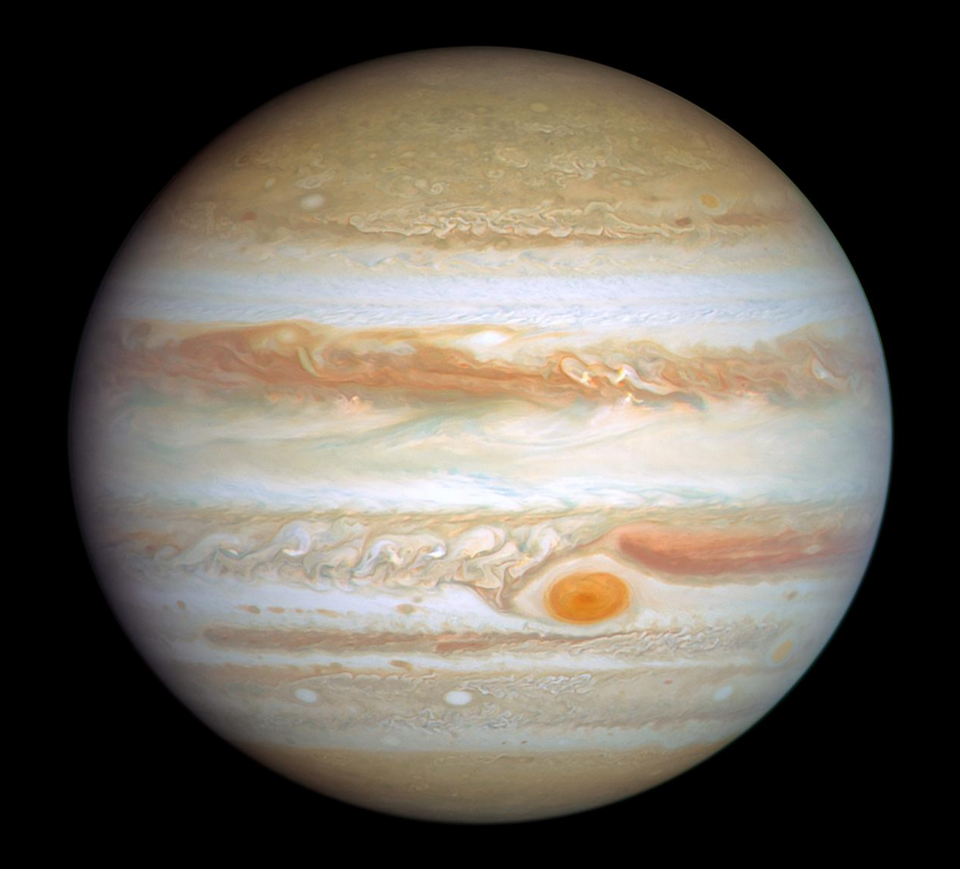
People often know Jupiter is the largest planet, but it is difficult to imagine just how huge it really is.
More than 1,300 Earths could fit inside Jupiter.
Its storms are gigantic too.
One storm called the Great Red Spot has been active for centuries. Scientists have observed it for hundreds of years, and it still continues today.
Jupiter is mostly made of gas, which makes it very different from rocky planets like Earth or Mars.
There is no normal solid ground where astronauts could simply land and walk around.
Space Is Silent
Movies often show loud explosions echoing through space.
Real space does not behave that way.
Sound needs air or another material to travel through. Space contains very little matter, so sound cannot move properly there.
That means astronauts outside spacecraft hear almost nothing unless vibrations travel through their suits or equipment.
It is strange to imagine such a huge universe being mostly silent.
Exploding stars, moving planets, giant collisions — and yet much of space remains quiet.
Astronauts Become Taller in Space
This sounds made up, but it actually happens.
Astronauts can grow slightly taller during long missions.
Gravity on Earth constantly presses down on the spine. In space, that pressure becomes much weaker, allowing the spine to stretch a little.
Some astronauts grow by several centimetres.
After returning to Earth, their height slowly returns to normal again.
Mars Has an Enormous Volcano
Mars contains the tallest volcano in the Solar System.
It is called Olympus Mons.
And it is gigantic.
Olympus Mons rises around 22 kilometers high, making it nearly three times taller than Mount Everest.
Scientists think Mars could form such enormous volcanoes partly because gravity there is weaker than on Earth.
Mars also lacks moving tectonic plates like Earth, allowing volcanoes to keep growing in the same place for very long periods.
Shooting Stars Are Not Really Stars
People often make wishes when they see shooting stars.
But they are not stars at all.
Most are tiny rocks or dust particles entering Earth’s atmosphere at very high speed.
As they rush through the atmosphere, they heat up and glow brightly for a few seconds.
Most burn away completely before reaching the ground.
If part of the object survives and lands on Earth, it becomes a meteorite.
Astronaut Training Is Surprisingly Difficult
Space travel may look smooth in videos, but astronauts train for years before missions.
Some training even happens underwater.
Large pools help astronauts practice moving in conditions somewhat similar to weightlessness.
Astronauts also learn how to handle emergencies, repair equipment, and survive difficult situations.
Space missions require teamwork, patience, and calm decision-making.
Black Holes Are Still Mysterious
Black holes are among the strangest objects scientists study.
Their gravity becomes so strong that even light cannot escape.
That is why black holes appear dark.
People sometimes imagine black holes as giant vacuum cleaners swallowing everything nearby, but that is not completely accurate.
Objects are only pulled in if they come too close.
Scientists still have many unanswered questions about black holes, which is one reason they remain fascinating.
The Sky Changes During Different Seasons
The night sky does not always look the same throughout the year.
Different constellations appear during different seasons because Earth moves around the Sun.
Ancient civilizations noticed these patterns long before modern astronomy existed.
They used stars to track seasons, travel routes, and farming cycles.
Even today, people enjoy searching for constellations on clear nights.
There Could Be More Stars Than Sand Grains
This fact surprises many students.
Scientists believe there may be more stars in the universe than all the grains of sand on Earth’s beaches combined.
It is almost impossible to picture numbers that large.
And many of those stars probably have planets orbiting around them.
That naturally leads to one enormous question:
Could life exist somewhere else in the universe?
Scientists are still searching for answers.
Astronomy Is Really About Curiosity
One reason people love astronomy is because it reminds us how much remains unknown.
Scientists still ask enormous questions.
Could humans live on Mars someday?
What exactly happens inside black holes?
Are there Earth-like planets around distant stars?
Astronomy does not only teach facts.
It teaches people to stay curious.
And curiosity has always pushed human beings forward.
Final Thoughts
Space may feel distant, but it quietly touches everyday life.
The Moon affects tides.
The Sun provides energy for life on Earth.
Satellites help people communicate, navigate, and predict weather.
And every night, the sky reminds people that Earth is only a tiny part of a much larger universe.
The next time you look upward, remember this:
Exploring the cosmos does not always begin with rockets.
Sometimes it begins with a question.
Quick Questions and Answers
1. Why is space silent?
Sound needs air or matter to travel, and space contains very little of either.
2. Which planet has a day longer than its year?
Venus does.
3. Are shooting stars actual stars?
No. They are small rocks or dust burning in Earth’s atmosphere.
4. Why do astronauts float?
They float because spacecraft in orbit experience weightlessness.
5. What is the tallest volcano in the Solar System?
Olympus Mons on Mars.


Comments