


Tales of Krishna: Ancient Indian Mythology & Legends

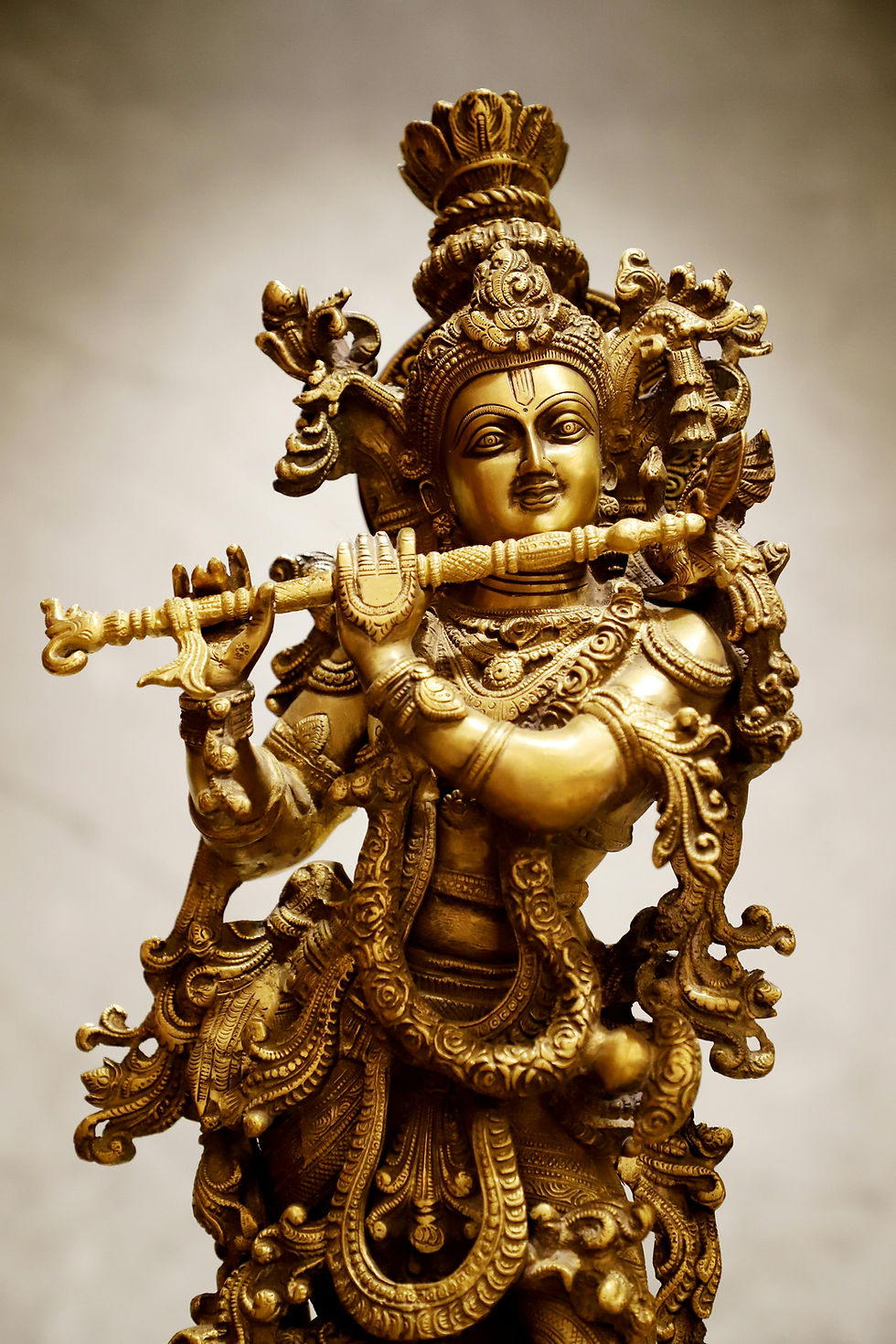
Tales of Krishna are not like lessons. They come to mind like memories. A grandma's voice at night. A bell from a temple that can be heard from far away. A flute note that sounds like it lasts longer than it should. These stories have lived on not because they were written down, but because people kept telling them. The stories of Krishna have spread through listening and believing over the years and across villages and cities. These stories are in the section called "Mythology & Legends," and they talk to kids and teens in a way they naturally understand. Fear and joy are next to each other. Responsibility and playfulness go hand in hand. Krishna is never seen as a god who is far away. He laughs, asks questions, waits, and sometimes leaves. That closeness between people is what keeps these stories going.
The Legend of Krishna’s Birth: Fear and Strength in Mathura
Krishna's story starts with him being locked up. King Kansa has put his parents in jail, and his rule is based on fear. He is haunted by the prophecy of his fall. When Krishna is born in Mathura, the air is not full of celebration; it is full of urgency. One of the most famous parts of the Tales of Krishna is when Vasudeva crosses the Yamuna River with his newborn baby in the dark and rain. The river itself is a silent witness. The Yamuna still flows through North India today, which makes this story more real because people still walk along its banks. This moment teaches something that isn't obvious. Courage doesn't always go up against power head-on. Sometimes it protects life without any fanfare.
Childhood Tales of Krishna: Life in Gokul and Vrindavan
Krishna grows up in Gokul and Vrindavan not as a prince, but as the child of a cowherd. He takes butter. He runs without shoes. He fights, laughs, and pushes the limits. These childhood stories seem real because they are based on real childhood events. The story is less about strength and more about trust when Krishna lifts Govardhan Hill to protect the villagers from storms that never stop. He questions blind obedience and reminds people that they shouldn't be afraid of nature. The forests and pastures in Vrindavan are not just for show. They set the pace for the stories. Kids who hear these stories don't see a perfect hero. They see someone who is curious, naughty, and brave in ways that surprise them.
Krishna and Sudama: A Tale of Friendship Beyond Wealth
There are no wars or miracles in the story of Krishna and Sudama. It slowly unfolds in Dwarka. Sudama comes poor, unsure, and almost ashamed. Krishna, who is now a king, runs forward without thinking. He cleans Sudama's feet. He pays attention. He remembers the time they spent together as kids. Dwarka, which is thought to have been near the western coast of what is now Gujarat, is the setting for one of the most peaceful scenes in Mythology & Legends. No one is asked. No one is asking for anything. The story teaches kids that how we treat others, not what we own, gives us dignity.
Radha and Krishna: The Divine Language of Devotion

The Radha Krishna tradition does not depend solely on events. It exists in emotion. These stories take place in the groves of Vrindavan and talk about joy, waiting, and being apart. They recognize desire but don't give easy comfort. These stories are emotionally honest for teens and young adults. Here, love isn't ownership. It is about making connections, making choices, and sometimes letting go. Krishna's flute is a voice of memory instead of a promise. These stories expect the reader to feel something and not rush through it.
A Leader Who Used Words Instead of Weapons
As Krishna gets older, he enters politics without wanting to be in charge. He becomes a guide in Dwarka instead of a ruler who is driven by ego. He gives advice to kings, settles arguments, and carefully reads situations. Krishna is different from other famous people because he is restrained. He doesn't fight very often. He waits. He pays attention. In the Tales of Krishna, leadership seems to be more about responsibility than power. This challenges the idea that strength always has to be loud for kids.
The Battle of Kurukshetra: The Bhagavad Gita and the Time of Questioning
Kurukshetra, which is now in Haryana, is where Krishna has the most important conversation of his life. Arjuna stops moving on the battlefield. He asks questions about everything. Krishna does not ignore his fear. The Bhagavad Gita is a conversation, not a command. Krishna talks about doing things, being responsible, and having a clear mind. He doesn't take away Arjuna's choice. He respects it. Today, this moment means a lot to me. It teaches students that being confused is not a sign of weakness. Asking questions is a way to grow.
Why the Tales of Krishna Still Matter Today
The Tales of Krishna are still a part of everyday life, from the Janmashtami celebrations in Mathura to the temple art in South India. They live because they change. Every generation hears them in a different way. Kids see play. Teenagers feel things. Adults see duty. Krishna never stays the same. That's why he lasts. These stories slow us down in a world that moves quickly and is full of demands. They remind us that wisdom doesn't yell. It hears.
Frequently Asked Questions
Why do people still relate to Tales of Krishna?
This is primarily due to the fact that Krishna embodies human qualities. He listens, thinks about it, and then makes a decision instead of just doing what he wants.
Are stories of Krishna only for studying religion?
No. They are about real-life values, feelings, and choices, but they are also myths and legends.
Which places are most important in Krishna's stories?
Mathura, Gokul, Vrindavan, Dwarka, and Kurukshetra are important places in the stories that help them feel real.
What is the most important lesson in the Tales of Krishna?
That what you mean is more important than how you look, and that wisdom often comes from being patient and talking to others.
How can kids today relate to these stories?
Consider them as tales of friendship, bravery, and decision-making, rather than as distant myths.


Comments