


The Renaissance Explained: Europe’s Rebirth and the Rise of Modern Thinking


The Renaissance did not arrive with an announcement.
There was no single year when Europe suddenly became modern. No trumpet call. No clean break from the past. Instead, change crept in quietly, carried by conversations, books, sketches, questions, and moments of doubt.
For centuries, life in Europe followed familiar paths. Knowledge was inherited, not examined. Most learning came through religious authority, and questioning accepted ideas was often seen as risky or unnecessary. People lived as their parents had lived, believed what they had been taught, and rarely imagined that the world could be understood in any other way.
But by the late Middle Ages, something began to shift.
Trade expanded. Cities grew wealthier. Merchants traveled farther than before. People encountered new languages, unfamiliar customs, and ideas that did not fit neatly into old explanations. Slowly, curiosity found space to breathe.
At first, these changes felt small.Then they began to gather weight.
When Thinking Changed Before Everything Else
The most important transformation of the Renaissance was not artistic or scientific. It was mental.
People began to ask questions that had once stayed unspoken. How does the human body truly function. What did ancient thinkers actually believe. Can nature be studied directly instead of only interpreted through tradition.
These questions were not rebellious by nature. They were careful. Observant. Patient.
Some found them unsettling. Others felt relieved, as if something long restrained had finally been allowed to move. The Renaissance encouraged people to look closely at the world around them rather than relying only on inherited explanations.
This shift did not reject faith or belief. It simply made room for inquiry. Knowledge no longer had to come from authority alone. It could come from experience.
That idea would quietly reshape Europe.
Why the Renaissance Started in Italy
Italy did not become the birthplace of the Renaissance by accident.
Cities like Florence, Venice, and Milan were rich from trade. Wealth created stability, and stability created time. Time to think. Time to read. Time to commission art and support learning.
Italy also lived among reminders of an earlier world. Roman roads, arches, sculptures, and ruins were part of daily life. When ancient Greek and Roman texts resurfaced, they did not feel distant or foreign. They felt familiar, almost personal.
Powerful families funded artists, scholars, and architects not just for prestige, but because they believed learning reflected honor. Their support gave thinkers the freedom to explore ideas without immediate fear of punishment or poverty.
This combination of wealth, memory, and protection allowed new thinking to take root.
Humanism and a New Approach to Learning
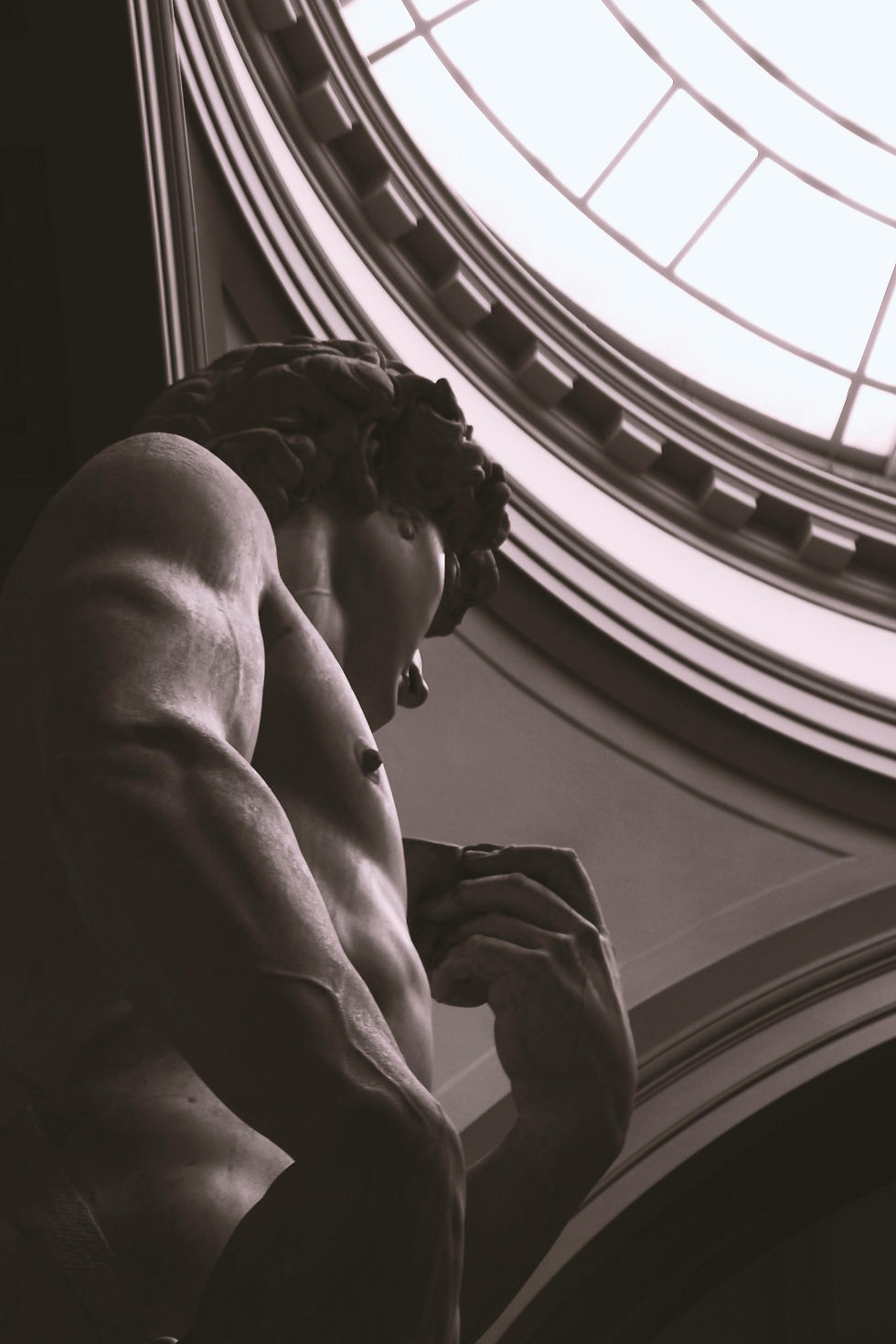
Humanism became one of the central ideas of the Renaissance.
It did not oppose religion. Instead, it expanded education beyond it. Humanists believed that studying history, literature, language, and philosophy helped people understand themselves and others better.
Education shifted from memorization to interpretation. Students were encouraged to read deeply, compare ideas, and argue thoughtfully. Learning became active rather than passive.
This approach spread slowly through schools and universities. Over time, it reshaped how people viewed knowledge itself. Education was no longer only about obedience. It was about understanding human experience.
That change would echo far beyond the Renaissance.
Renaissance Art and the Study of Real Life
Renaissance art feels different because it was created differently.
Artists observed real bodies, real movement, and real emotion. They studied how muscles worked, how light fell across surfaces, how expressions changed with feeling. Art became a form of investigation.
Leonardo da Vinci sketched human anatomy not out of morbid curiosity, but because he wanted truth in his work. He did not separate science from art. For him, understanding the body made beauty more honest.
Paintings gained depth. Faces showed emotion. Scenes felt alive rather than symbolic. Art stopped existing only to decorate sacred spaces. It began to reflect ordinary human life.
People could see themselves in it.
Buildings Built with Balance in Mind
Architecture followed the same philosophy.
Builders returned to ancient Roman ideas of proportion and harmony. Structures were designed to feel balanced and calm rather than heavy or imposing. Columns, arches, and symmetry reflected the belief that beauty and reason belonged together.
Churches, public spaces, and homes began to change. These shifts were gradual. Medieval buildings did not disappear overnight. But slowly, the visual language of Europe evolved.
Architecture became another way of expressing order in the world.
Renaissance Science and the Rise of Observation
The Renaissance did not discard the past. It tested it.
Scholars began to observe the natural world directly. They recorded what they saw rather than what tradition said they should see. Sometimes, their observations challenged long held beliefs.
This created tension. But it also created progress.
Looking at the stars, studying plants, examining the human body, and questioning inherited explanations laid the groundwork for modern science. Knowledge became something to be discovered, not just inherited.
That shift changed how people trusted evidence.
Exploration and the Expansion of Curiosity
Curiosity did not stay indoors.
Improved maps and navigation tools encouraged exploration. European travelers ventured farther than ever before, encountering new lands and cultures. These journeys were driven by trade, ambition, and wonder.
The world suddenly felt larger. More connected. More complex.
Exploration reshaped how Europeans understood geography, culture, and themselves. It challenged old assumptions and introduced new questions about humanity’s place in the world.
The Printing Press and the Spread of Renaissance Ideas
Before the printing press, books were rare and costly. Knowledge traveled slowly. Literacy was limited.
Johannes Gutenberg’s invention changed everything.
Books became accessible. Ideas spread quickly. More people learned to read. More people questioned what they read. Arguments traveled across borders. Education moved beyond elite circles.
The printing press did not create the Renaissance, but it accelerated it. Every idea gained momentum.
How the Renaissance Spread Across Europe
The Renaissance did not remain Italian.
As ideas moved north, they adapted. Writers and thinkers explored moral questions, individual responsibility, and social behavior. Artists focused on daily life as much as classical themes.
Each region shaped Renaissance ideas according to its culture. But the core remained the same. Curiosity. Learning. Human potential.
Why the Renaissance Still Matters
The Renaissance matters because it taught people how to think, not what to do.
It indicated that progress begins with observation, patience, and questions. It reminded humanity that learning grows when curiosity is protected.
Modern education, science, art, and debate all carry traces of this period. Every time someone learns by asking instead of memorizing, the Renaissance lives on.
It reminds us that change does not need noise. Occasionally, it only needs space.
Frequently Asked Questions
What was the Renaissance?
The Renaissance was a long period when Europeans reexamined art, learning, and knowledge through observation and curiosity.
Why is it called a rebirth?
Because ancient ideas were rediscovered and used to inspire new ways of thinking.
What is humanism?
Humanism is an approach that places a high value on education, reasoning, and understanding the human experience.
Why was art important?
Art was important because it reflected real life, emotion, and human observation.
Why does the Renaissance still matter today?
The Renaissance played a significant role in shaping modern thinking, learning, creativity, and scientific inquiry.


Comments