


Bhutan - The Kingdom of Happiness

Bhutan, The Kingdom of Happiness is often spoken of as if it were a story, and in many ways it is. This tiny country, high up in the eastern Himalayas, between India and China, has made choices that seem odd in today’s fast moving world. Bhutan is asking not how much can it produce or earn, but how its people are really living. are they happy. Do they feel secure? Do they still have a connection to their land and traditions? These questions are not simply concepts. They mold our daily life.
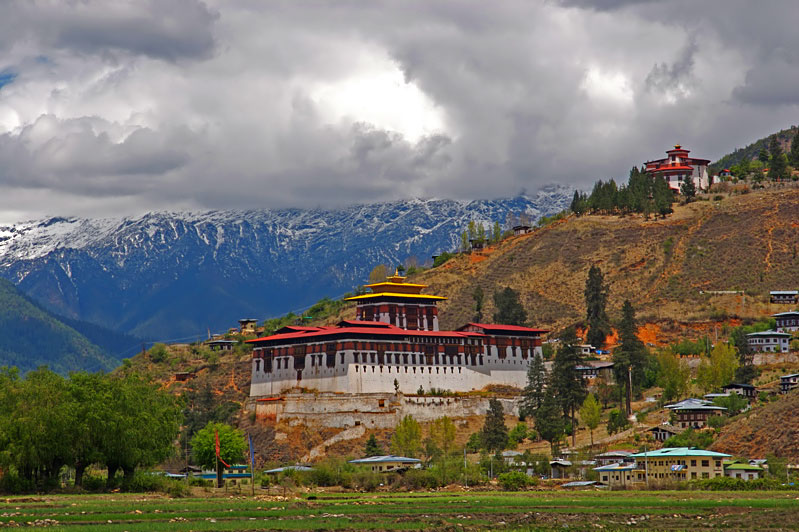
Natural Scenery and Geography
To understand Bhutan you must imagine its land. In the north the mountains rise steeply, with their summits covered with snow for most of the year. It’s more than just the pretty views. “They are life. From here the rivers start and run down through the country, watering the fields and villages as they go. Further down the valleys open up. In Paro and Punakha you see houses, farms and small villages very close to the rivers. Farmers on the terraced hillside. These terraces were here before. They have been built up slowly, from generation to generation, showing how people have learned to live with the land, not against it. You go south and the air changes. It is getting warmer, thick with the smell of the forest. The greenery looks darker, thicker. You could drive a few hours and feel like you'd crossed into different worlds. What I notice is the care. The country is largely wooded and the people talk about the woods with reverence. This is not just some policy on paper. When nature is strong it feels like an understanding that life is in balance.


The Gross National Happiness Philosophy
The idea that draws attention to Bhutan -The Kingdom of Happiness is something that sounds simple but is quite powerful. Gross National Happiness (GNH) It started with a decision the king made in the 1970s to think outside the box. He wasn't saying no to economic growth, but he wasn't going to let it be the only goal. Instead, Bhutan examines four areas. Governance, environment, culture and development. They are not separate from life. They’re in on it. We view every big decision through this lens. It feels like a real idea because it relates to everyday experience. People are asked about their health, about their relationships, about their meaning in life. The country hears these replies. But if you step back, the question Bhutan asks is very human. What makes a life feel whole. Not perfect, but consistent and meaningful. That question continues to guide its way.
Culture, Religion and Everyday Life
Bhutan’s culture is not something you visit. It’s something you notice quietly when you spend time there. You hear it in the way people greet each other, you feel it in the quiet of the monasteries, you sense it in the sound of prayer flags flapping in the wind. Much of it is inspired by Vajrayana Buddhism. It influences the way people view life, patience, and balance. “It’s not something you have to study deeply to feel. It shows up in small, everyday ways. One of the most visible symbols of this spirit is the Tiger’s Nest Monastery in Paro. It's built high up on a cliff and looks almost impossible at first sight. But people go up. Slowly, step by step. Some are drawn to faith, some to contemplation, some just to know what draws others. Festivals, called Tshechus, have a different kind of energy. The open spaces are full of bright colours, music and masked dances. Kids watch carefully. The elders tell the stories behind each movement. These are not performances for entertainment. They mean something. Even clothes, it’s a sense of belonging. The gho is worn by men and the kira by women at formal occasions. It’s another way of saying that identity still matters.

Contemporary Development and Governance
Bhutan has not been static. In 2008 it became a constitutional monarchy from an absolute monarchy. Today, people choose their leaders but the king still guides us. There’s a steady feeling to how change happens. It is not hurried. Policies are made over time, often thinking about what is going to happen years down the road, not months. Hydropower is important to the economy. The rivers generate electricity, which is shared with India. This creates income with minimal damage to the environment. At the same time, Bhutan does not preach fast industrial growth. Some things are not retryable once lost, there’s a feeling. Such thinking guides the course of development. The years have seen more people having education and healthcare. Schools teach not only knowledge but also values. Students are asked to think about their role in the world around them.
Tourism and Foreign Interest
Bhutan’s tourism is different. The country does not open its doors wide but rather restricts the number of people coming in. It may seem limiting, but it preserves what makes Bhutan special. “People come in and say how quiet it is. Not silence. But a sort of quiet. Where you notice things you might normally miss. The trees in wind. The beat of everyday life. Thimphu, Punakha Dzong, Paro Valley etc are beautiful but not busy or rushed. There is room to stop. This has allowed Bhutan to avoid many of the problems associated with heavy tourism. Its character is largely unchanged.
Environmental Leadership and Future Prospects
Bhutan’s attitude towards environment is clear. It returns more than it receives. The country is carbon negative, meaning it takes in more carbon than it gives out. Wildlife can roam, maintaining forest connectivity” Life is going on without too much disturbance. From high mountain animals to valley species. But there are problems. Glaciers are changing due to climate change. This can cause sudden flooding. The younger generations are also looking outwards, curious about opportunities outside of the traditional life. Bhutan is at a stage where it has to come to terms with these changes. It’s done this before, slowly, thoughtfully. It may be steered again by the same method.
Conclusion
Bhutan - The Kingdom of Happiness is not about how fast, how big, trying to impress. Instead it serves something quieter. A lifestyle that is focused on what really matters. It reminds us that progress is not just how far we go, but how we feel on the way. In selecting this path, Bhutan has fashioned something rare. Not perfect, but very well-conceived.
Frequently Asked Questions
1. What is the Location of Bhutan in terms of geography?
The eastern Himalayas are where Bhutan is located, between India and China.
2. What makes Bhutan important for the environment?
It protects its forests and takes in more carbon than it lets out.
3. Can tourists travel freely in Bhutan?
Travel is regulated by culture and nature protection.
4. What are the main cultural characteristics of Bhutan?
Buddhist traditions, festivals, traditional clothing, and strong community values are all part of Bhutan's culture.


I enjoyed reading about Bhutan and its reputation as the Kingdom of Happiness. The focus on wellbeing, culture, and national values offered a refreshing perspective on development and success. It reminded me that quality of life can be measured in many ways. During a demanding academic period, I used take my online statistics course for me while balancing several responsibilities. The article was fascinating.
I enjoyed reading about Bhutan and its reputation as the Kingdom of Happiness. The focus on wellbeing, culture, and national values offered a refreshing perspective on development and success. It reminded me that quality of life can be measured in many ways. During a demanding academic period, I used take my online statistics course for me while balancing several responsibilities. The article was fascinating.
This article gives a really interesting look at Bhutan and its focus on happiness over pure economic growth, which is a refreshing way to think about national progress. I liked how it highlights balance, culture, and well-being as key parts of life. During a busy semester, I used Online nursing Class Help while juggling coursework and clinical assignments at the same time. That experience helped me stay organized and manage my responsibilities better when everything felt overwhelming.