


Sweden: A Country of Nature and New Ideas

Updated: Mar 15
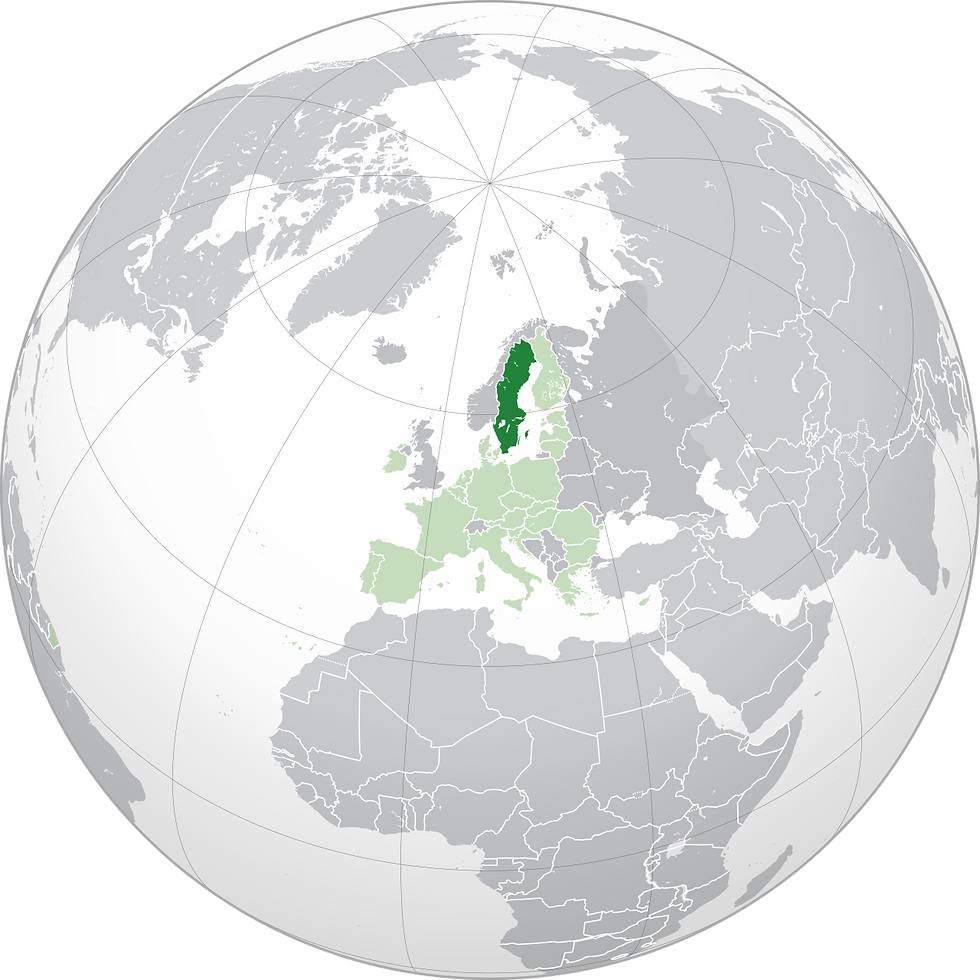
In northern Europe, there is a country where forests seem to go on forever, lakes are around every corner, and cities quietly come up with new ideas that change the world. People often say that Sweden is calm, thoughtful, and very connected to nature. Visitors quickly notice something special. Water, trees, and open space are always close by, even in busy places. Sweden is a Scandinavian country, along with Norway and Denmark. Over time, the country has become known for its good schools, creative industries, and care for the environment. Nature still has an effect on daily life, though. For students learning about countries & cities, Sweden is a good example of a modern country that can grow while still protecting clean water, forests, and wildlife.

Important Information and Classification
Type: A Nordic constitutional monarchy in Northern Europe
Unique Features: • Lots of lakes and big forests • A strong awareness of the environment • A world-famous reputation for design, science, and technology • A way of life that values health, balance, and equality
Important Facts and Numbers: • There are about 10.5 million people living there. • The whole area is about 450,000 square kilometers. • Almost two-thirds of the country is covered by forest.
Big Problems: • Climate change is having an effect on northern areas. • Demand for housing in cities that are growing • Protecting animals and plants while also working in industry.
A Country Made by Its Landscape
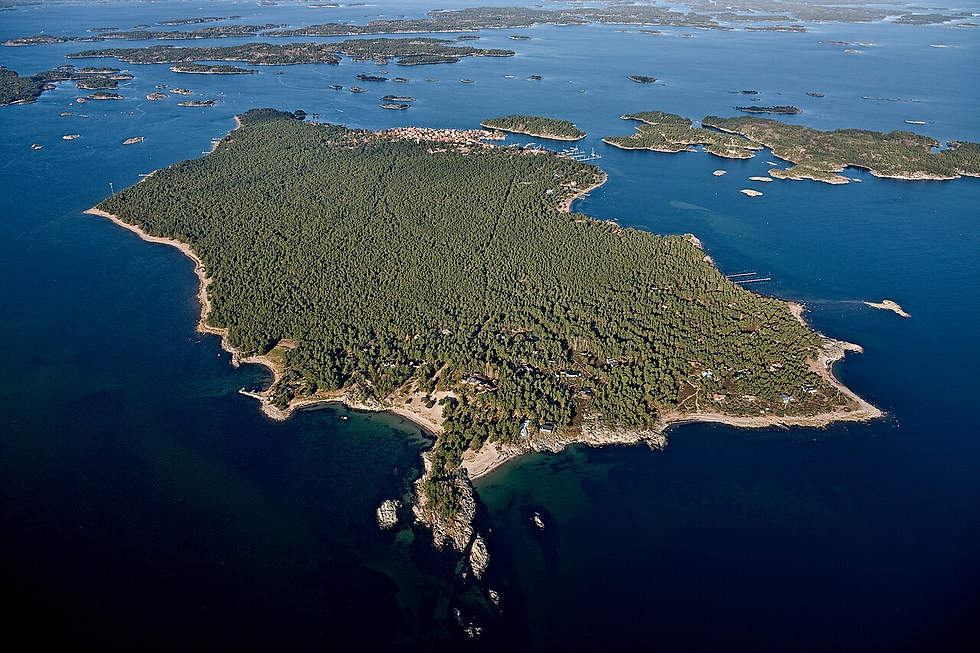
The landscape of Sweden is a big part of what makes it special. From south to north, the country is very long. In the south, the view is mostly of farmland and rolling hills. As you go north, the forests get thicker and the mountains start to rise. The “Scandinavian Mountains” are on the border between Sweden and Norway in the west. In the winter, these mountains get a lot of snow, which feeds rivers that flow through the country. There are a lot of forests in Sweden. Pine and spruce trees grow thickly in the north, like in ‘Norrland’. Moose, lynx, wolves, and brown bears live in these forests. In some parts of Sweden, it's not uncommon to see a moose on a quiet country road. There is water all around. There are over 95,000 lakes in Sweden. Lake Vänern, the biggest lake, is so big that it feels like a sea. ‘Lake Vättern’, known for its deep, clear water, is close by. The “Stockholm Archipelago” is a group of islands in the Baltic Sea that are on the east coast. There are thousands of small rocky islands all over the water. During the summer, a lot of families go there to sail, fish, or just relax by the sea. Many Swedes feel at home outside because they are always surrounded by nature.
The Right to Roam
One idea explains why Swedes spend a lot of time outside. This is known as "Allemansrätten," which means "the right of public access." People can walk through forests, camp in nature, or pick berries on private property as long as they are careful about the environment. For instance, a family might go for a walk in the woods to pick blueberries or wild mushrooms. Hikers can put up a small tent in the countryside for the night as long as they don't leave any damage behind. Kids learn this rule very early on. Students often go on field trips with their schools to learn about plants, animals, and ecosystems. National parks also keep a lot of landscapes safe. “Abisko National Park” is in the far north and has wide open valleys and clear skies. People go there in the winter to see the "Northern Lights," which are waves of green and purple light that move across the sky. “Söderåsen National Park” is farther south and protects old forests and steep valleys that were made by rivers long ago. These protected areas help keep Sweden's natural beauty safe.

From the Viking Age to Now in Sweden
The history of Sweden goes back to the Viking Age, which was more than a thousand years ago. During this time, Scandinavian traders and sailors travelled a lot, crossing the Baltic Sea and sailing down the rivers of Eastern Europe. In the seventeenth century, Sweden became a powerful kingdom in the Baltic region. People often call this time the "Swedish Empire." Swedish rulers were in charge of a number of nearby areas and were important in European politics. Sweden stopped expanding its military and instead worked on making its society more stable. In the 1800s, industry grew and education spread across the country. Sweden is a constitutional monarchy now. As head of state, King “Carl XVI Gustaf” represents the country. Elected leaders, on the other hand, lead the country through parliament. This system has helped keep the government stable and strong public institutions.
Cities with Personality and Imagination
Sweden's cities show both the past and the present. The capital city, Stockholm is made up of fourteen islands that are all connected by bridges. A lot of the city has water running through it, which makes it feel bright and open. Gamla Stan is a historic district with narrow streets and colourful buildings that are hundreds of years old. People often walk through this old town area to see the Royal Palace and churches that have been around for a long time. Stockholm has also become a hub for tech and digital businesses at the same time. There are a lot of start-ups and research groups in the city, which makes it a great place for creative thinking. Gothenburg is a city on the west coast that is known for shipbuilding, trade, and industry. The harbour connects Sweden to shipping routes all over the world. Malmö is farther south and is just across the water from Denmark. The long ‘Øresund Bridge’ makes it easy for people to travel between Malmö and Copenhagen. Each city shows a slightly different side of life in Sweden.
New Ideas, Science, and Education
It wasn't by chance that Sweden became known for its science and creative thinking. For generations, education has been very important. Alfred Nobel, the scientist who came up with the Nobel Prize, is a well-known person in Swedish history. These awards honour people who have done great things in the fields of physics, chemistry, medicine, literature, economics, and peace. The ceremony happens in Stockholm every year. Sweden has also made a number of famous businesses. Swedish engineers and designers came up with the ideas that led to the founding of companies like ‘Volvo’, ‘IKEA’, ‘Ericsson’, and ‘Spotify’. Universities are very important for research and learning. Founded in the 15th century, Uppsala University is still one of the oldest universities in northern Europe. The “Karolinska Institute” is well-known around the world for its medical research. These schools still teach people from all over the world how to be scientists, doctors, engineers, and scholars.
Taking care of nature while moving forward
Taking care of the environment is a big part of Swedish life. A lot of national policies support the use of renewable energy and responsible land use. A lot of Sweden's electricity comes from hydroelectric power plants along rivers in the north. Wind turbines also make energy in open plains and along the coast. Cities pay for public transportation systems like buses, trains, and subways. Many neighbourhoods have bike paths that let people get around without cars. People also take great care of forests. Timber production is still important to the economy, but rules help keep wildlife habitats safe and stop overcutting. This careful balance between protecting the environment and building things has become a part of Sweden's national identity. For people who are learning about countries & cities, Sweden is a great example of how nature, education, and careful planning can change the future of a country. At Wisdom Point, kids learn about countries like Sweden to help them understand how geography and the choices people make shape the world we live in.
Questions People Ask a Lot
1. What is it about Sweden that makes it a country of nature and innovation?
Sweden has big natural areas like forests and lakes, as well as strong accomplishments in science, technology, and the arts.
2. What is the capital of Sweden?
The capital is Stockholm. It was built on fourteen islands that are connected by bridges and waterways.
3. How many lakes are in Sweden?
Sweden has more than 95,000 lakes, which makes water a big part of the country's landscape.
4. What does "Allemansrätten" mean?
Allemansrätten is Sweden's tradition that lets people walk through nature without hurting it.
5. What international award is linked to Sweden?
Alfred Nobel started the Nobel Prize to honour important work in science, literature, economics, medicine, and peace.
6. What makes Sweden a good place to live for the environment?
To help the economy grow while having less of an effect on the environment, Sweden puts money into clean transportation systems, renewable energy, and protecting forests.

Comments