


The Most Inspiring Women Scientists You’ve Probably Never Heard Of
- Wisdom point
- Dec 2, 2025
- 5 min read

Why Some Stories Wait Too Long to Be Told
When you flip through history books or watch documentaries, you often see the same names repeated again and again. Many of them did incredible things, but what about the people whose stories never reached the spotlight? Across continents and centuries, women were doing extraordinary work in laboratories, observatories, hospitals, field stations and even in their homes.
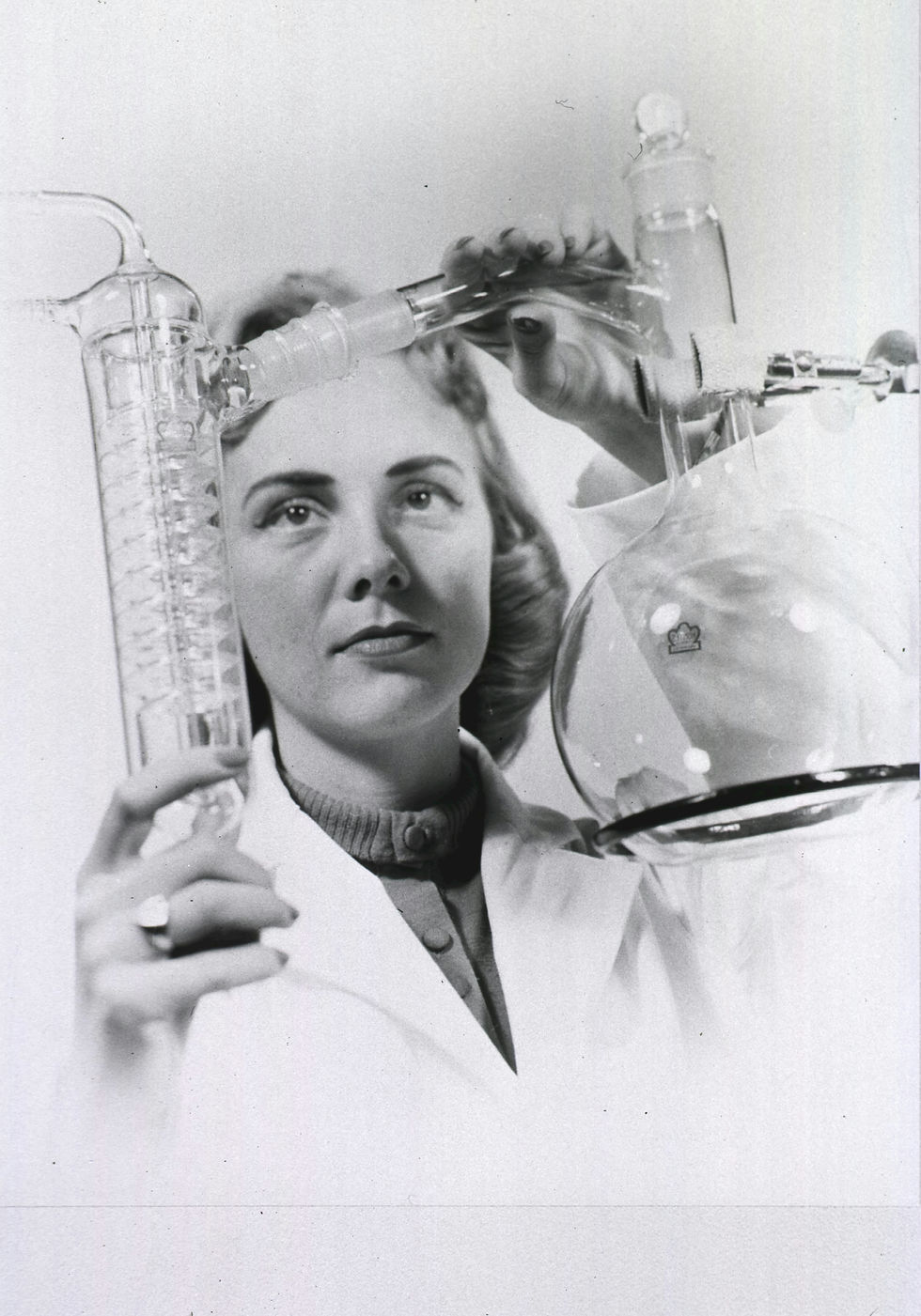
Some worked quietly because society expected them to stay invisible. Others fought for the right just to sit in a classroom or enter a lab. Their discoveries shaped space science, medicine, computing, chemistry and environmental protection, even if they rarely appeared on magazine covers. This chapter is about some of those women, the ones who went ahead anyway, even when the world told them not to.
Women Who Opened Windows to the Universe
Henrietta Swan Leavitt and the Distance to the Stars
Astronomy is often linked to a small group of famous men, but one of the most important clues about the universe came from Henrietta Swan Leavitt. Sitting in a room full of photographic plates at Harvard, she studied faint stars called Cepheid variables. While many ignored such tedious work, she noticed something others missed. These stars brightened and dimmed in a steady pattern, and that pattern revealed how far away they were.

Her discovery allowed astronomers to measure the scale of galaxies, something that changed astronomy forever. Modern telescopes in Chile, Hawaii and space missions still rely on the principles she uncovered.
Annie Jump Cannon and the Language of Starlight
Another brilliant star-watcher, Annie Jump Cannon, had her own gift. She could look at a star’s spectrum and classify it almost instantly. She sorted hundreds of thousands of stars by hand, creating the system scientists still use today. Her work shaped space missions and helped astronomers map the sky with far greater accuracy.
These women read the sky differently, and the world is still catching up to their brilliance.
Women Who Built Modern Computing Before Computers Became Cool
Grace Hopper and the Birth of Programming Language
Long before laptops existed, Grace Hopper imagined a world where computers could understand everyday language. She believed machines should work with words, not only numbers. Her idea helped create COBOL, one of the earliest programming languages.
People often forget that she also popularised the word bug when she removed an actual insect from a machine. Her belief that programming should be simple and clear shaped modern computing.
Katherine Johnson and the Mathematics of Spaceflight
Another name that deserves constant remembrance is Katherine Johnson. At NASA, she performed calculations that determined the paths of spacecraft. Her equations guided the Apollo missions and ensured astronauts returned safely. She worked during a time of racial segregation and gender discrimination, but her accuracy was unquestionable.
Students today learn orbital mechanics using the mathematics she refined.These pioneers didn’t wait for the world to make space for them. They carved out their own.
Women Who Transformed Chemistry and Medicine
Tu Youyou and the Life Saving Discovery for Malaria
Chemistry shapes more of our lives than we realise. Tu Youyou, a Chinese scientist who studied traditional medicine, identified artemisinin, a compound that became the most effective treatment for malaria. Communities across Africa, Asia and South America survive today because of her work.
For many families, her discovery meant the difference between life and death.
Alice Ball and the Breakthrough Against Hansen’s Disease
Alice Ball solved a problem doctors believed was impossible. Hansen’s disease, or leprosy, caused both suffering and social stigma. Ball created a method that made chaulmoogra oil usable as a treatment, something no scientist had done before. Her method changed lives for years, though credit was taken from her. Only recently has history honoured her contributions.

These women approached chemistry with compassion as well as curiosity.
Women Who Fought for the Earth Through Science
Wangari Maathai and the Power of Environmental Action
Protecting the planet is one of today’s most important challenges. Wangari Maathai from Kenya noticed forests disappearing and communities losing their land. Instead of waiting for change, she encouraged women to plant trees. Her Green Belt Movement became a continent-wide effort that restored landscapes and supported families.
Her work earned her a Nobel Peace Prize and helped rebuild ecosystems across Africa.
Katherine Curtis Henderson and Climate Science of the North
In the Arctic, Katherine Curtis Henderson blended scientific training with Indigenous knowledge. She studied how melting ice affects wildlife and northern communities. By bringing together cultural understanding and scientific methods, she connected local voices with global climate science.
Environmental science relies on people who truly listen. These women did exactly that.
Women Who Transformed Technology by Seeing What Others Missed
Hedy Lamarr and the Idea That Became Wi-Fi
Some breakthroughs come from unexpected places. Hedy Lamarr, known worldwide as an actress, also worked as an inventor. During World War II, she created a frequency-hopping communication system to protect signals from being jammed. Her idea was ignored at the time, but decades later it became the foundation for Wi-Fi, Bluetooth and GPS.
Students using tablets today rarely know their devices carry her brilliance.
Ellen Ochoa and the Science of Seeing Patterns
Ellen Ochoa became the first Latina astronaut to travel to space. Before her mission, she created optical systems that helped machines recognise patterns. Her inventions supported robotics, engineering and quality-control systems used in many industries.
Her presence in space inspired young scientists everywhere, especially those who rarely saw themselves represented in STEM fields.
These women show that you do not need a perfect background or a traditional path to change the world.
Frequently Asked Questions
Why are many women scientists less known?
Because for decades, institutions refused to acknowledge or publish women’s work, and credit was often given to male colleagues.
Which areas did these women transform?
Astronomy, chemistry, medicine, computing, physics, environmental science and space exploration.
Did any receive global awards?
Yes. Tu Youyou and Wangari Maathai both received Nobel Prizes.
How did Katherine Johnson help space missions?
Her calculations guided spacecraft safely during NASA’s Apollo missions.
How did Hedy Lamarr influence modern devices?
Her frequency-hopping idea became the foundation of Wi-Fi, Bluetooth and GPS.
Why is Henrietta Leavitt’s discovery important?
She found a pattern in Cepheid stars that helps astronomers measure cosmic distances.
How do these scientists inspire children?
Their stories show that talent, curiosity and persistence matter more than stereotypes.
Are women still underrepresented in science?
In some fields, yes, though awareness, education and representation are steadily improving.
How can schools support more girls in STEM?
By sharing stories like these, offering practical activities and creating classrooms where every idea is valued.


Comments