


Laws of Motion: A Simple Guide

Why We Study Motion at All

Every time a ball rolls across a playground, a bus speeds up on the road, ora the same set of rules is quietly at work. These rules were written down more than three centuries ago by Sir Isaac Newton, yet they still guide everything from simple classroom experiments to major space missions. What makes them so interesting is how easily they connect our everyday observations with the way the universe behaves. Whether a child pushes a toy car or engineers plan a satellite launch, the same basic ideas appear. That is why these laws remain a fundamental part of physics and continue to shape research centers like NASA in the United States, ESA in Europe and ISRO in India.
Newton wrote these ideas in his famous book Principia in 1687. Even though science has grown tremendously since then, especially in areas like quantum physics and relativity, his laws still describe motion so clearly that students around the world learn them as their first introduction to mechanics. They work perfectly well for almost everything we see and touch in daily life. Only when objects become extremely tiny or move close to the speed of light do scientists need different rules.
Newton’s First Law
The natural tendency to stay the same
Think about sitting in a stationary bus. You are relaxed and still. But the moment the bus starts moving, your body is pushed slightly backward. Your body tries to remain at rest even though the bus has begun to move. This simple reaction is exactly what Newton described in his first law. He explained that an object will remain at rest, or keep moving in a straight line at the same speed, unless an external force changes it.
This idea is called inertia. Bigger objects have more of it. That is why pushing a bowling ball is much harder than pushing a tennis ball. The bowling ball naturally wants to stay the way it is. In space, astronauts experience this even more strongly. With almost no friction around them, even a small push can make an object drift for a long distance. That is why astronauts train carefully to control their movements.
Newton’s Second Law
How force changes the speed of things
If you kick a football gently, it crawls across the field. If you kick it hard, it shoots forward. Newton turned this everyday experience into a clear scientific rule. His second law explains that the acceleration of an object depends on the force applied and the object’s mass. The equation F = m × a is simply a short way of writing this.
Engineers rely on this idea constantly. When designing vehicles, aircraft or rockets, they calculate exactly how much force is needed to produce the speed they want. Without this law, planning safe roller coasters in amusement parks or building engines for spacecraft would be almost impossible. At space centers, teams study how much thrust is required to lift a rocket against Earth’s gravity, and those calculations all begin with Newton’s second law.
Newton’s Third Law
Action and reaction everywhere
This is perhaps the most memorable law because we experience it so often. When you jump off a small boat, the boat drifts backward. Your legs push the boat one way, and the boat pushes you the other. Newton described this through a simple rule: every action has an equal and opposite reaction.
Rockets make this law come alive dramatically. When fuel burns and rushes downward, the rocket is pushed upward with equal force. This principle is the heart of every launch, whether it is a small model rocket built by students or a massive booster sending astronauts into space. Nations that work on advanced space programs, such as the United States, Japan, China and India, all follow this same principle while designing their rockets.
Why These Old Laws Still Matter
It may seem surprising that ideas from the seventeenth century still influence modern life, but they truly do. Cars rely on these laws when accelerating and braking. Athletes unknowingly apply them when adjusting speed or angle. Elevators, aircraft, bicycles, robots in factories, even simple toys all work because Newton’s rules describe motion so accurately.
Scientists working at places like CERN study areas where Newton’s laws no longer fully apply, especially at extremely tiny scales. But even in those advanced experiments, Newton’s laws remain the starting point, the basic language of motion.
Common Mistakes About Motion
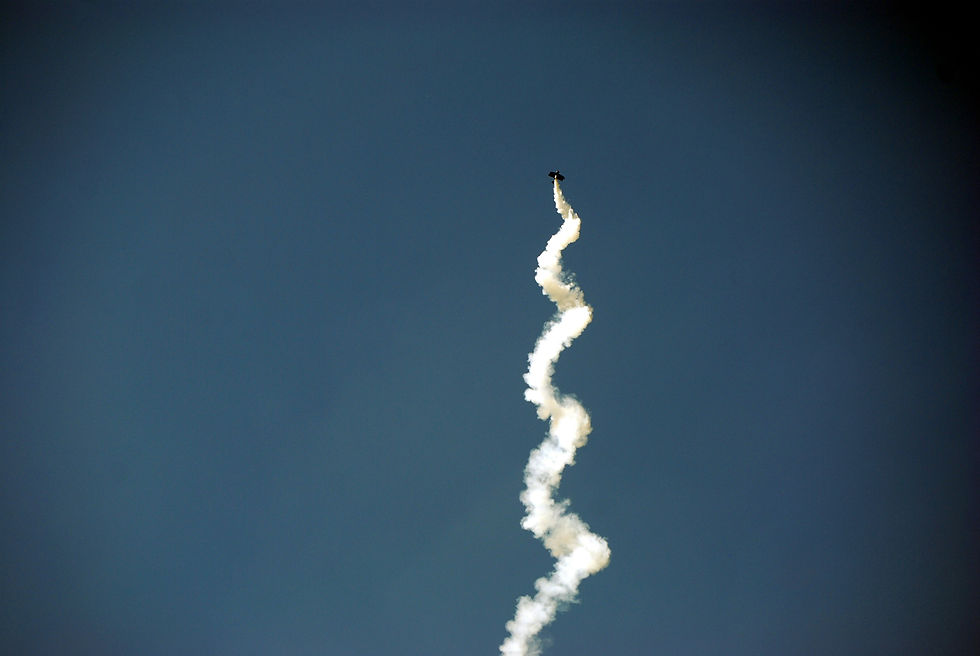
Many people think a moving object needs a constant push to keep going. That is not true. If friction did not exist, a moving ball would continue forever. Air hockey tables show this well because the puck glides almost without slowing. Another common belief is that heavier objects fall faster. On the Moon, where there is no air resistance, astronauts once dropped a hammer and a feather together. They hit the surface at the same time. The experiment beautifully showed that weight does not affect the fall when air resistance is removed.
Students sometimes imagine that Newton’s laws are only for large machines or space science, but these rules explain simple daily motions too. Even the way you walk forward involves pushing the ground backward slightly, and the ground pushes you forward in response.
How Students Use These Laws in Real Learning

Science classrooms around the world use ramps, toy cars, weights and pulleys to help students see motion rather than just read about it. Feeling the change in speed or watching how objects move helps ideas sink in naturally. These small experiments are the first steps toward careers in engineering, robotics and space missions. Countries working on major technology programs, including India, China, France, Japan and the United States, depend on these laws when building satellites, rovers and space probes.
Young learners often find great inspiration in these simple principles. Someone who understands the basics of motion at school may one day design a Mars rover, build safer transportation systems or create robots that perform delicate tasks.
Motion Beyond Earth
As humans explore other worlds, Newton’s laws continue to guide their steps. On the Moon, weaker gravity makes each movement feel slow and bouncy. On Mars, rovers must be designed carefully so they do not slip on loose soil. Although Newton’s laws still hold everywhere, the conditions change. This gives scientists interesting challenges as they imagine life and travel on other planets.
FAQs
Why do Newton’s laws still matter today?
Because every machine, vehicle and spacecraft relies on these rules to move safely and correctly.
Where do we see the first law in daily life?
Whenever something keeps moving until friction or another force stops it. A bicycle slowing down only because of brakes is a common example.
Why is the second law important for engineers?
They must know how much force is needed to move or slow objects of different sizes, especially in vehicles and aircraft.
How does the third law help rockets fly?
The burning fuel pushes downward, and the rocket receives an upward push of equal strength.
Do Newton’s laws work in space?
Yes, and they are even easier to observe there because almost no friction interferes.


Comments